The best CRM adapts to teams, not the other way around
Many teams choose a CRM based on feature lists, brand recognition, or industry trends. While these factors can be helpful, they often miss the most important question: does this system fit how your team actually works? A CRM that forces teams to change their natural workflow creates friction, slows adoption, and eventually becomes shelfware.
The most effective CRM systems adapt to existing processes instead of replacing them. They support how teams communicate, follow up, and move deals forward—without demanding unnecessary behavioral changes. Fit matters more than features when it comes to long-term success.
Workflow alignment drives adoption
CRM adoption rarely fails because tools lack capability. It fails because teams stop using them. When a system feels heavy, confusing, or misaligned with daily work, people revert to spreadsheets, inboxes, or personal notes.
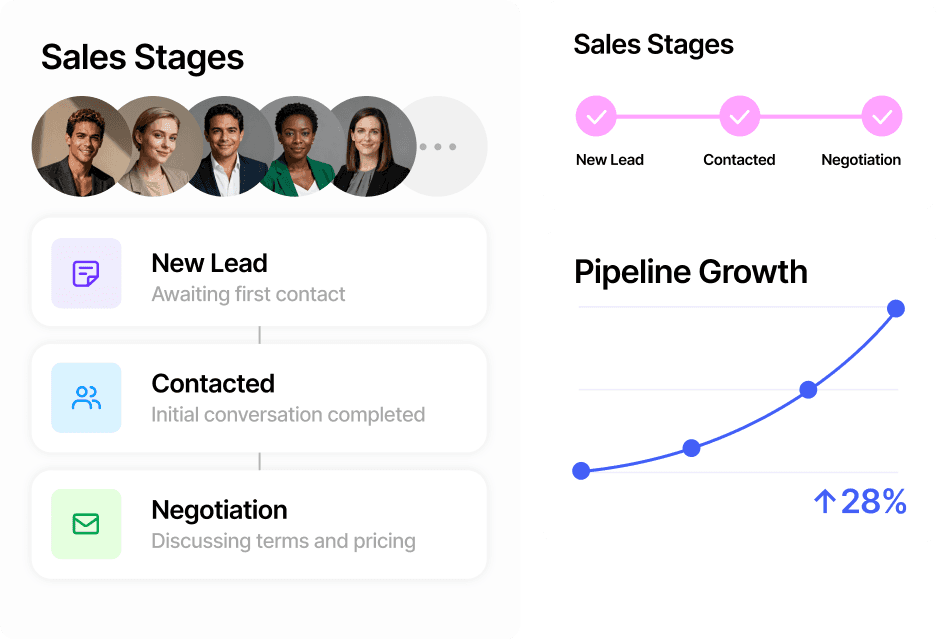
A CRM that fits the team’s workflow reduces resistance. Clear stages, intuitive ownership, and visible next steps make the system feel like a natural extension of work rather than an extra obligation. When tools match how teams think and operate, adoption becomes effortless instead of enforced.
Simplicity reveals what truly matters
In the pursuit of flexibility, many CRMs become overly complex. Custom fields, rules, and automations promise control but often obscure what matters most: which deals need attention and what should happen next.
Choosing a CRM that emphasizes simplicity helps teams stay focused. By prioritizing visibility over configuration and clarity over customization, teams can make better decisions faster. Simplicity doesn’t limit capability—it highlights priorities and reduces distraction.
Scalability depends on structure, not size
Teams often assume they need a more powerful CRM as they grow. In reality, growth exposes weaknesses in structure rather than tool capacity. Without clear stages, ownership, and follow-up practices, scaling only amplifies confusion.
A CRM that fits the team’s workflow provides structure that scales naturally. New team members onboard faster, collaboration improves, and processes remain consistent as volume increases. Scalability comes from reinforcing fundamentals, not adding layers.
Choosing for fit creates long-term confidence
The right CRM creates confidence across the organization. Teams trust the pipeline, leaders trust the data, and decisions are made with clarity. Instead of constantly adjusting the system, teams focus on improving execution.
Choosing a CRM that fits how your team works isn’t about short-term convenience—it’s about long-term alignment. When tools support people rather than constrain them, sales processes become calmer, more predictable, and easier to scale.