The silent deal killer
Follow-ups are one of the most underestimated parts of the sales process. Most teams understand their importance in theory, yet in practice, follow-ups are often inconsistent, delayed, or completely forgotten. Deals rarely fall apart because a product isn’t good enough; they fall apart because momentum fades. A prospect goes quiet, an email isn’t answered, or a task slips through the cracks—and suddenly a promising opportunity disappears without a clear reason.
In modern sales environments, buyers are busier than ever. Silence doesn’t usually mean rejection; it means distraction. When teams fail to follow up at the right moment, they unintentionally hand control of the timeline to chance. The cost of this isn’t just lost deals—it’s unpredictable pipelines, inaccurate forecasts, and teams constantly reacting instead of proactively moving deals forward.
Follow-ups create momentum, not pressure
There’s a common misconception that frequent follow-ups feel pushy or intrusive. In reality, thoughtful follow-ups create clarity, not pressure. They remind prospects of context, help them move forward in their decision-making process, and show that the sales team is attentive and reliable. The key difference lies in timing and relevance.
Effective follow-ups aren’t about sending more messages—they’re about sending the right message at the right time. A well-timed reminder after a demo, a short check-in following a proposal, or a clear next step after a meeting keeps conversations alive and focused. When follow-ups are structured and intentional, they reduce friction instead of creating it, making it easier for both sides to progress.
Why follow-ups break down inside teams
Despite their importance, follow-ups are often where sales processes start to break down. As pipelines grow, teams rely more on memory, scattered notes, or inbox reminders to manage next steps. This works temporarily—but it doesn’t scale. When ownership isn’t clear or tasks aren’t visible, follow-ups become inconsistent across the team.
Another issue is context loss. Without a centralized timeline of activity, team members may not know when the last interaction happened, what was discussed, or what the agreed next step was. This leads to delayed responses, awkward outreach, or duplicated efforts. Over time, these small inefficiencies compound into missed opportunities and frustrated prospects.
Turning follow-ups into a system, not a habit
The most effective sales teams treat follow-ups as a system, not a personal habit. Instead of relying on individual discipline, they build workflows that make next steps visible, assignable, and easy to act on. Tasks, reminders, and activity timelines ensure that nothing depends on memory alone.
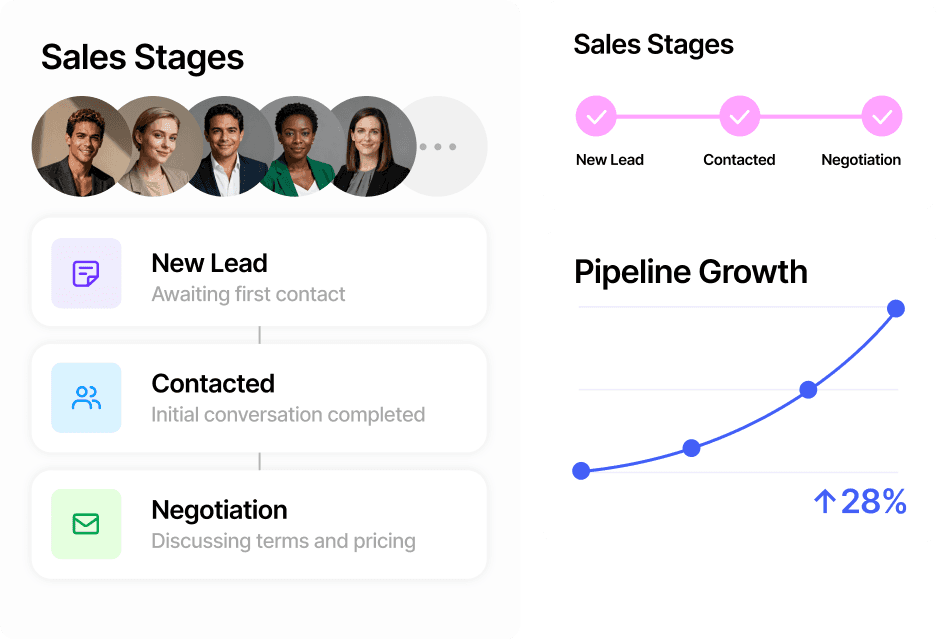
When follow-ups are embedded directly into the pipeline—tied to stages, owners, and timelines—they become part of the deal’s natural progression. Teams can see what’s overdue, what’s coming next, and where momentum is slowing down. This level of visibility not only improves execution but also builds confidence across the team, allowing managers to coach proactively instead of reacting after deals stall.
Follow-ups as a competitive advantage
In crowded markets, the difference between winning and losing often comes down to execution, not features. Strong follow-up practices signal professionalism, reliability, and clarity—qualities that buyers notice, even if they don’t explicitly mention them. Consistent follow-ups show prospects that their time is valued and that the process is under control.
More importantly, structured follow-ups create predictability. Teams can forecast more accurately, prioritize better, and scale without losing control of their pipeline. When follow-ups are treated as a core part of the sales system rather than an afterthought, they stop being a weakness—and become a competitive advantage.