Repeatability turns effort into a system
Many sales teams rely heavily on individual effort. Top performers succeed through experience, instinct, and personal routines, while results vary widely across the rest of the team. This approach may work at a small scale, but it becomes fragile as volume grows. Without a repeatable process, success is difficult to replicate.
A repeatable sales process transforms individual actions into a system. Instead of relying on memory or improvisation, teams follow a shared structure that guides leads from first contact to close. This consistency reduces guesswork, improves predictability, and creates a foundation for sustainable growth.
Clear entry points set the tone for the entire pipeline
Every repeatable process starts with clear entry points. When leads enter the pipeline inconsistently, downstream stages quickly become messy. Some leads arrive with context, others without. Some are qualified, others are not. Over time, this inconsistency makes it harder to assess progress or prioritize work.
Defining how leads are captured and when they enter the pipeline creates order from the start. Whether leads come from forms, emails, or manual input, they should arrive in a consistent format with clear ownership. This early clarity sets expectations and allows the rest of the process to operate smoothly.
Stages create rhythm and accountability
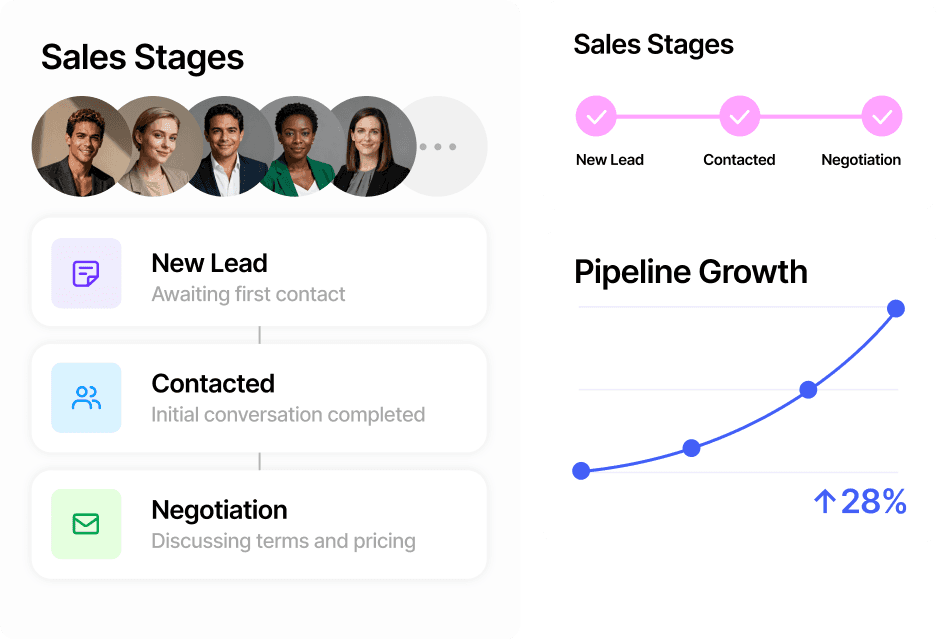
Sales stages are more than labels—they define how work happens. A repeatable process uses stages to create rhythm, guiding deals through predictable steps. Each stage should represent a meaningful change in status, with clear criteria for moving forward.
When stages are well defined, accountability improves. Teams know what’s required before advancing a deal, managers can identify bottlenecks, and forecasting becomes more reliable. Instead of reacting to scattered activity, teams operate with a shared understanding of progress.
Follow-ups connect stages into a continuous flow
Even with clear stages, deals can stall without consistent follow-ups. Repeatability depends on continuity—ensuring that each interaction leads naturally to the next. Follow-ups bridge the gaps between stages, maintaining momentum throughout the process.
By integrating tasks and reminders directly into the workflow, teams reduce reliance on memory and personal systems. Follow-ups become part of the process, not an afterthought. This consistency ensures that deals continue moving forward, regardless of who owns them.
Repeatable processes make growth predictable
The true value of a repeatable sales process emerges as teams grow. New hires ramp faster, collaboration improves, and performance becomes easier to analyze and refine. Instead of reinventing the process for every deal, teams focus on execution and improvement.
Repeatability doesn’t eliminate flexibility—it provides a stable framework within which teams can adapt. By turning leads into deals through a consistent process, sales teams build confidence, predictability, and a system that scales without breaking.